Alternative Computations — Worlds Otherwise Calculated
The universe computes. Life, too, is computation. Mathematics is a language through which we understand the world. Change the language, and the universe appears in another form—our way of seeing changes. Sometimes, those in power choose which way of seeing prevails. What falls outside that choice is named error—and vanishes.
Japan once had a distinctive mathematics—wasan. Calculation practised as beauty, play, and offering. Problems and solutions took form as sangaku, displayed at shrines and temples. Festive knowledge comparable to haiku and the way of tea. In the late nineteenth century, the Meiji government sought national strength. As part of a modernisation project that introduced Western science and technology—including military technology—the government made Western mathematics the basis of formal education. Wasan was displaced from the institutional mainstream. The cosmos it had opened was gradually closed off.
Gunpowder can become a weapon or a firework. Stripped of play and festivity and fixed on efficiency and accuracy alone, technology tilts towards violence, excludes fluctuation and deviation, and causes the world to converge upon a single way of seeing. What I seek is something firework-like—open to fluctuation and deviation, play and festivity.
A century and a half later, quantum computing confronts a universe of superposition, interference, and entanglement. Yet its development, too, is governed by utility and optimisation. Quantum noise is managed and suppressed as error because it disrupts stable results. Still, noise interferes, entangles, and carries the past. Within it lies a cosmos that could be otherwise. This work does not restore the past. Drawing on the play and festivity embedded in wasan, it sets another mode of calculation in motion and calls that cosmos into the present.
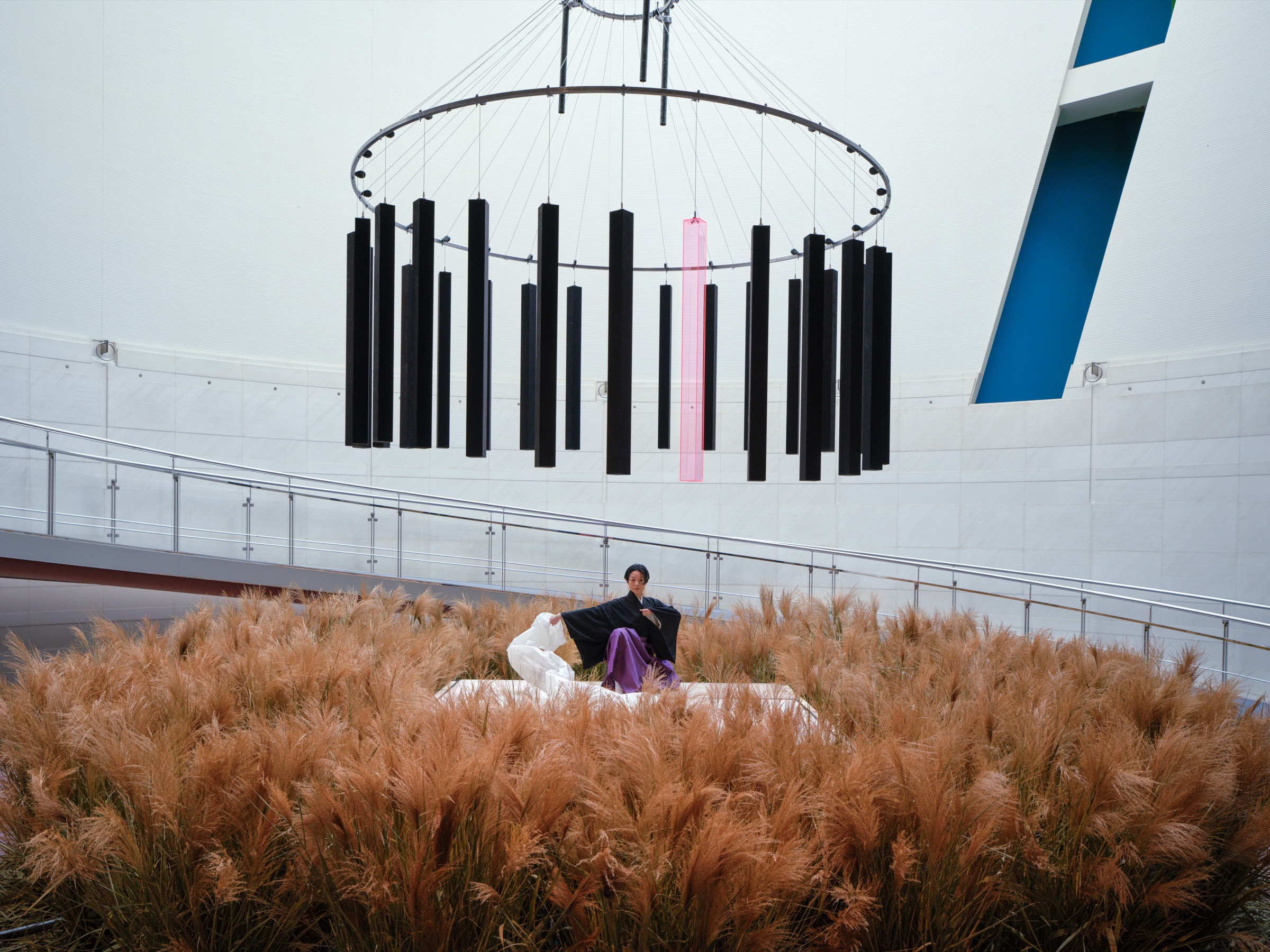
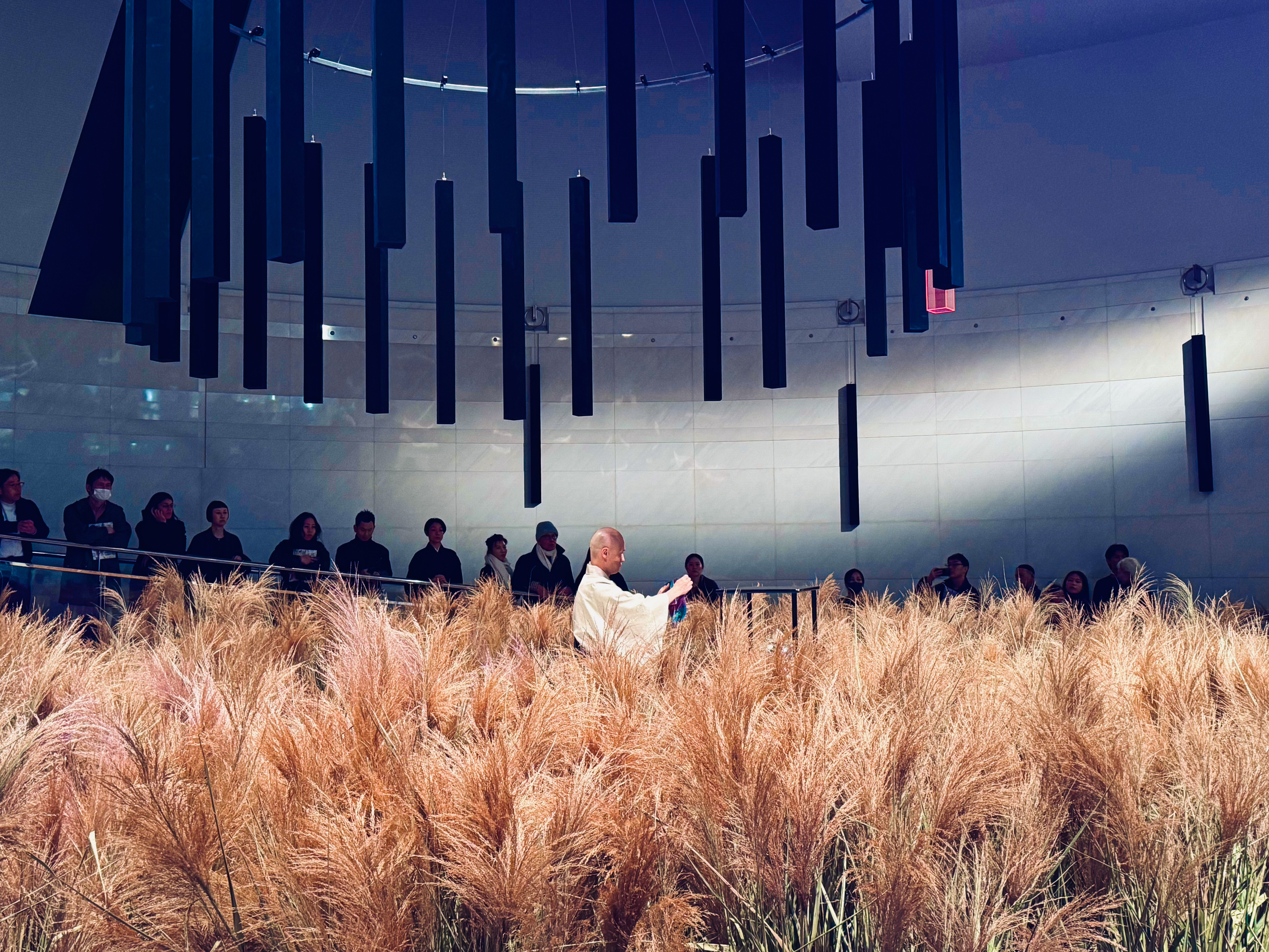
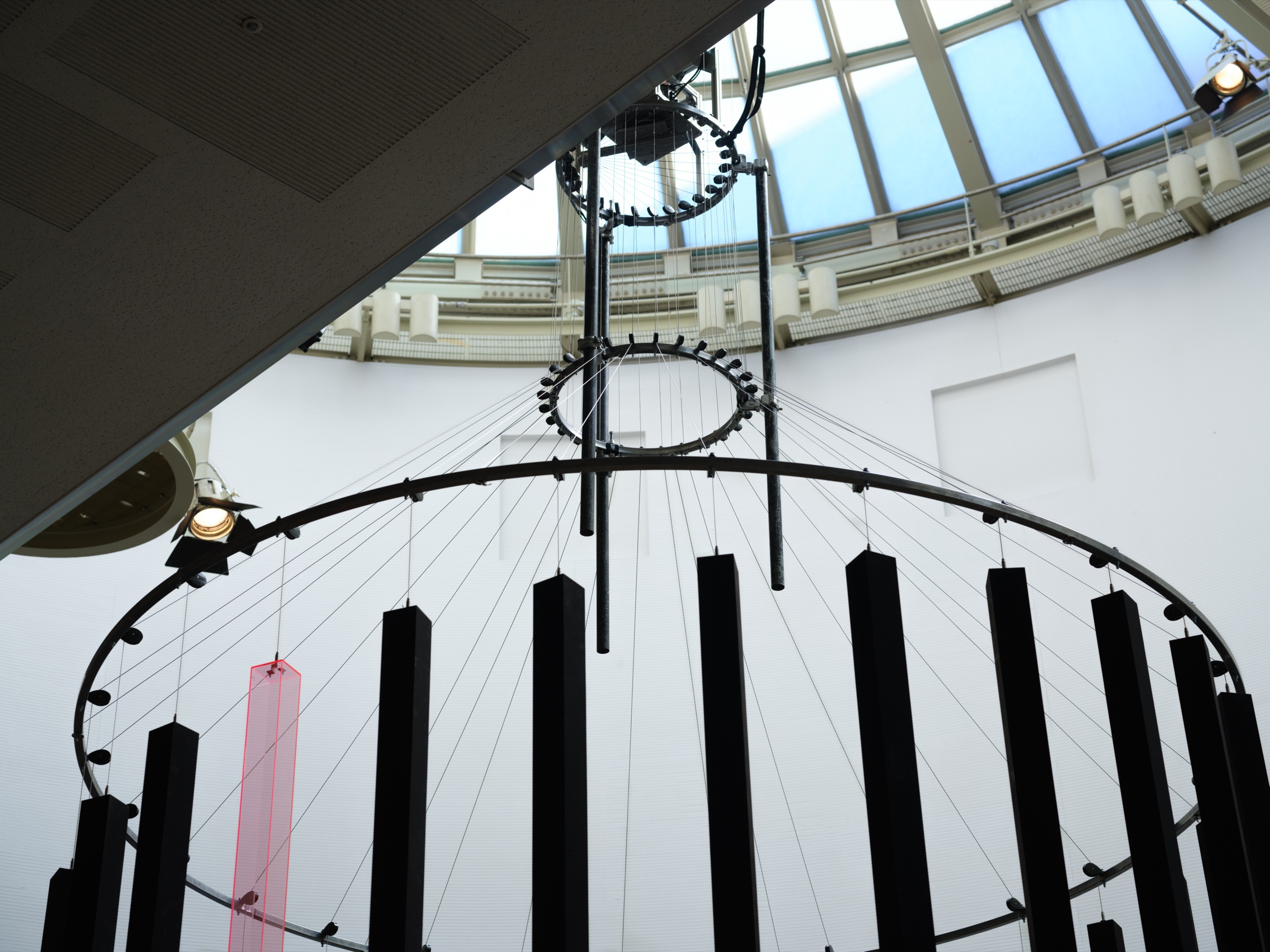
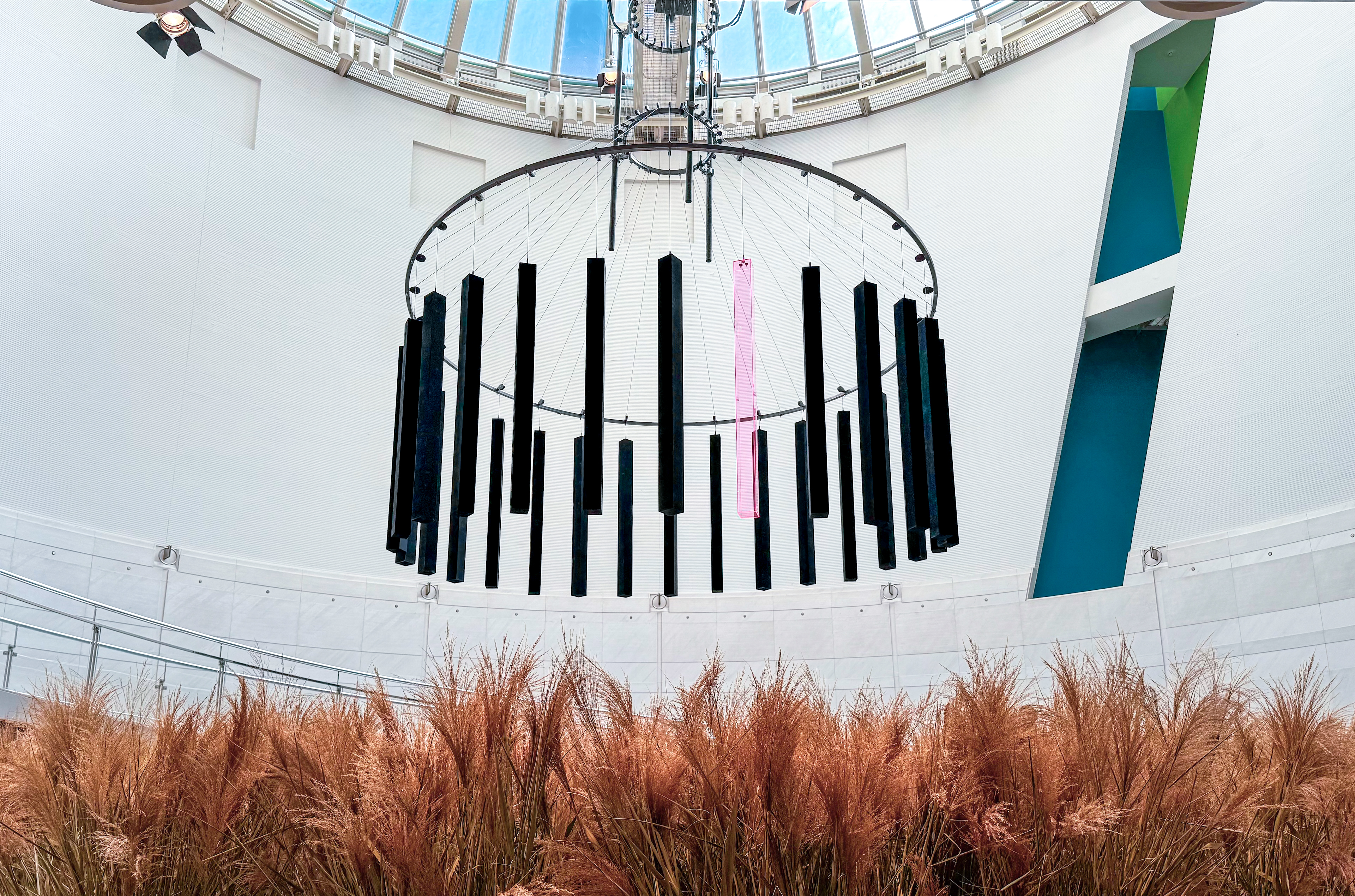
The Alternative Computations series sculpts cosmologies embedded in vernacular cultures of calculation that are gradually being lost. Built from quantum noise, the installation is structured in three layers—Heaven, Earth, and Human—understood in East Asian cosmology as weaving the myriad phenomena of existence. Twenty-eight sangi orbit overhead as the Twenty-Eight Lunar Mansions. A tatami floor marks a ritual threshold. More than four thousand reeds fill the space.
In a corner of Tokyo’s concrete forest, amid the dry fragrance of reeds, the dancer’s movements, the tea practitioner’s gestures, the presence of the audience, and meteorological data are thrown into a quantum reservoir computing system embedded in the ceiling’s sangi mechanism. Quantum noise becomes rain. High-dimensional dynamics determine the rods’ trajectories and take form as sound descending through the space. Mechanical creaking holds the weight of matter, anchoring experience between dreaming and waking. Thunder, wind, insects, cranes, and frogs—a 28-minute sound collage. Each cycle ends a universe; another begins.