The TEA-ROOM
SOTOROJI #2
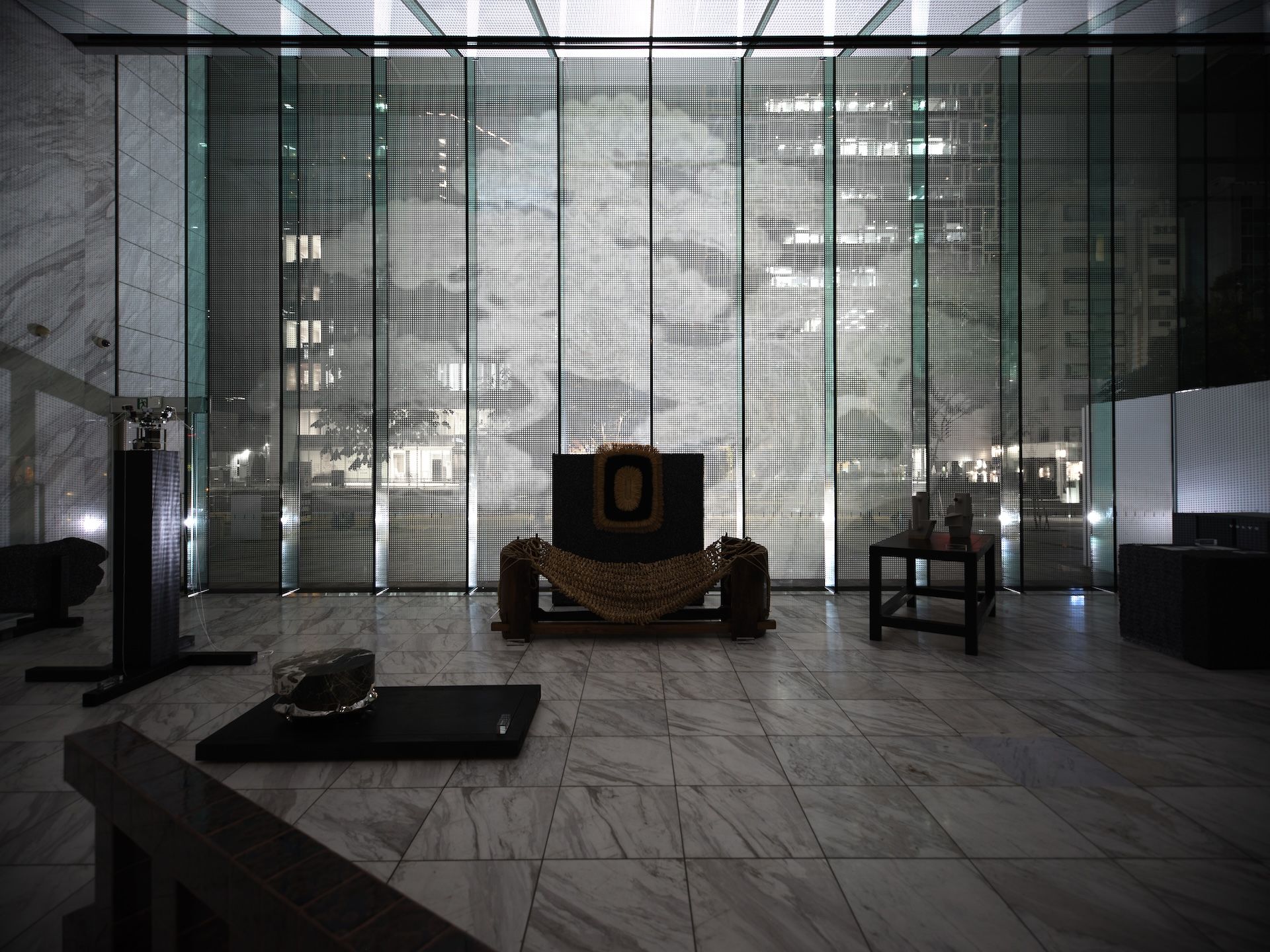
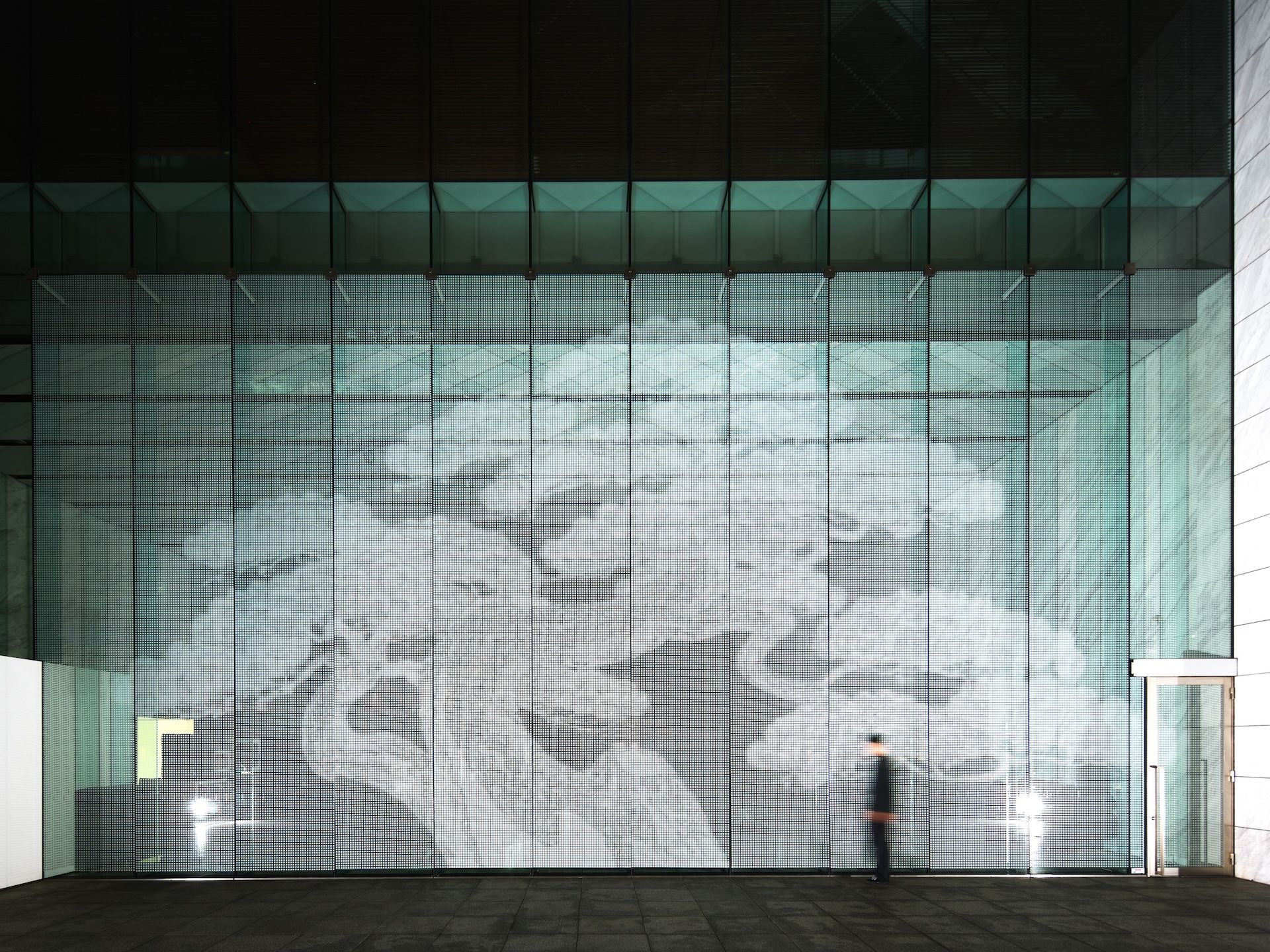
From a distance, the image of an oimatsu emerges—a venerable Japanese black pine in the spreading, time-worn form depicted on the kagami-ita, the mirror panel at the back of a Noh stage. Scan the codes up close, and it branches into the worlds of more than one hundred artists and their works.
In chanoyu (the Japanese tea ceremony), the soto-roji, or outer garden, is the first space through which guests pass on their way towards the inner garden and the tea room. Its arrangement of garden, objects, gestures and rituals functions as a shared spiritual protocol, helping participants brush away the ‘dust of the everyday’ and enter another mode of perception. The SOTOROJI series reinterprets this mechanism through the QR code, a protocol shared by contemporary life.
SOTOROJI #2 depicts the oimatsu, the venerable pine that forms the permanent backdrop of the Noh stage. The motif is traditionally associated with the Yōgō no Matsu at Kasuga Taisha, a Japanese black pine understood as a yorishiro through which a deity of the performing arts may descend. It allows a presence that is not physically there to enter the stage.
More than 130,000 QR codes extend across over 100 square metres of glass. Up close, each is an individual sign leading elsewhere; from a distance, together they form a single pine. The codes connect to information about more than one hundred artists and their works. As distance and focus shift, one image branches into different practices and worlds. The work asks whether stepping back from one’s own frame might allow another world to come into view.
The work was presented in Reframing, an official exhibition of DESIGNART TOKYO 2024.