The TEA-ROOM
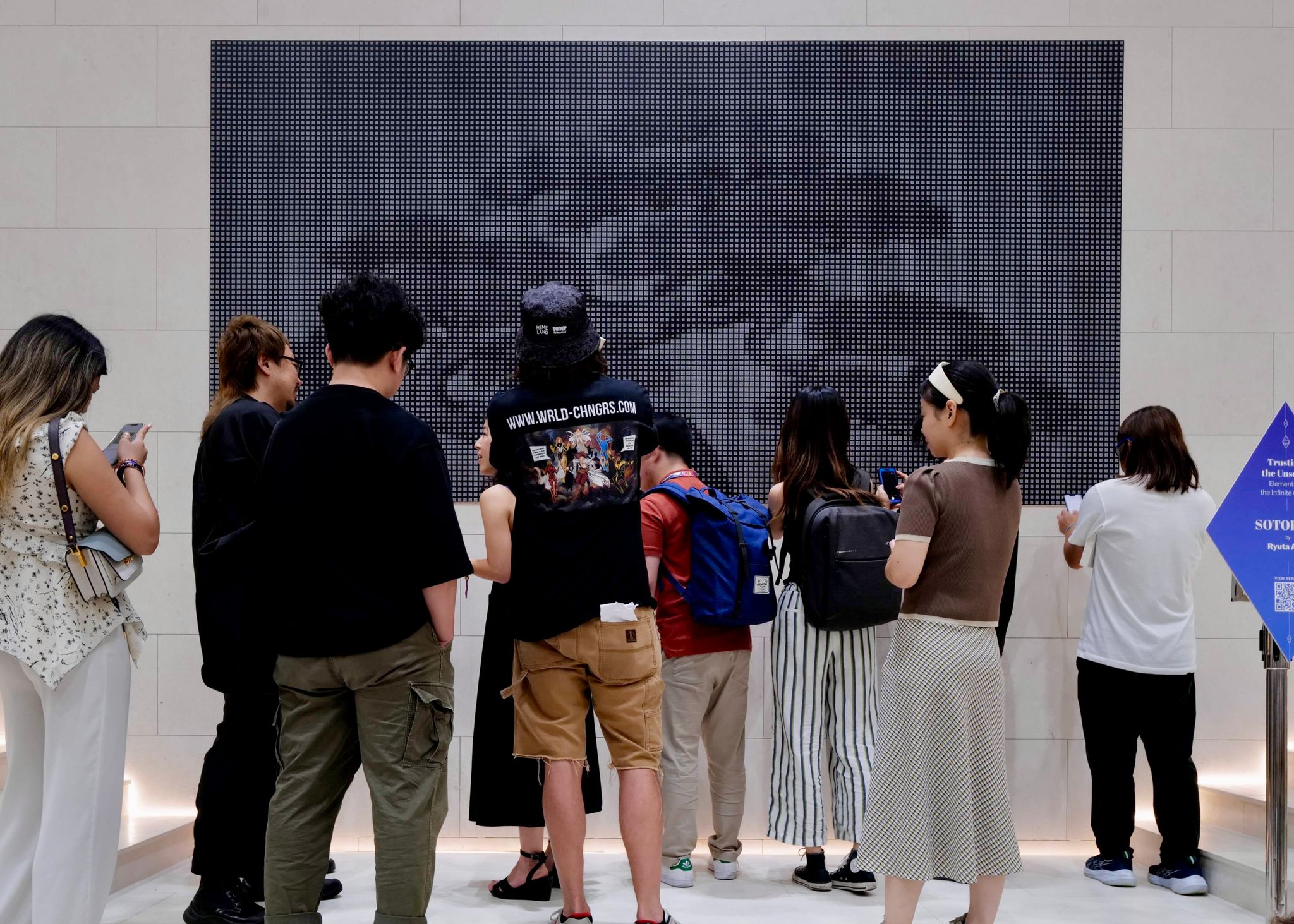
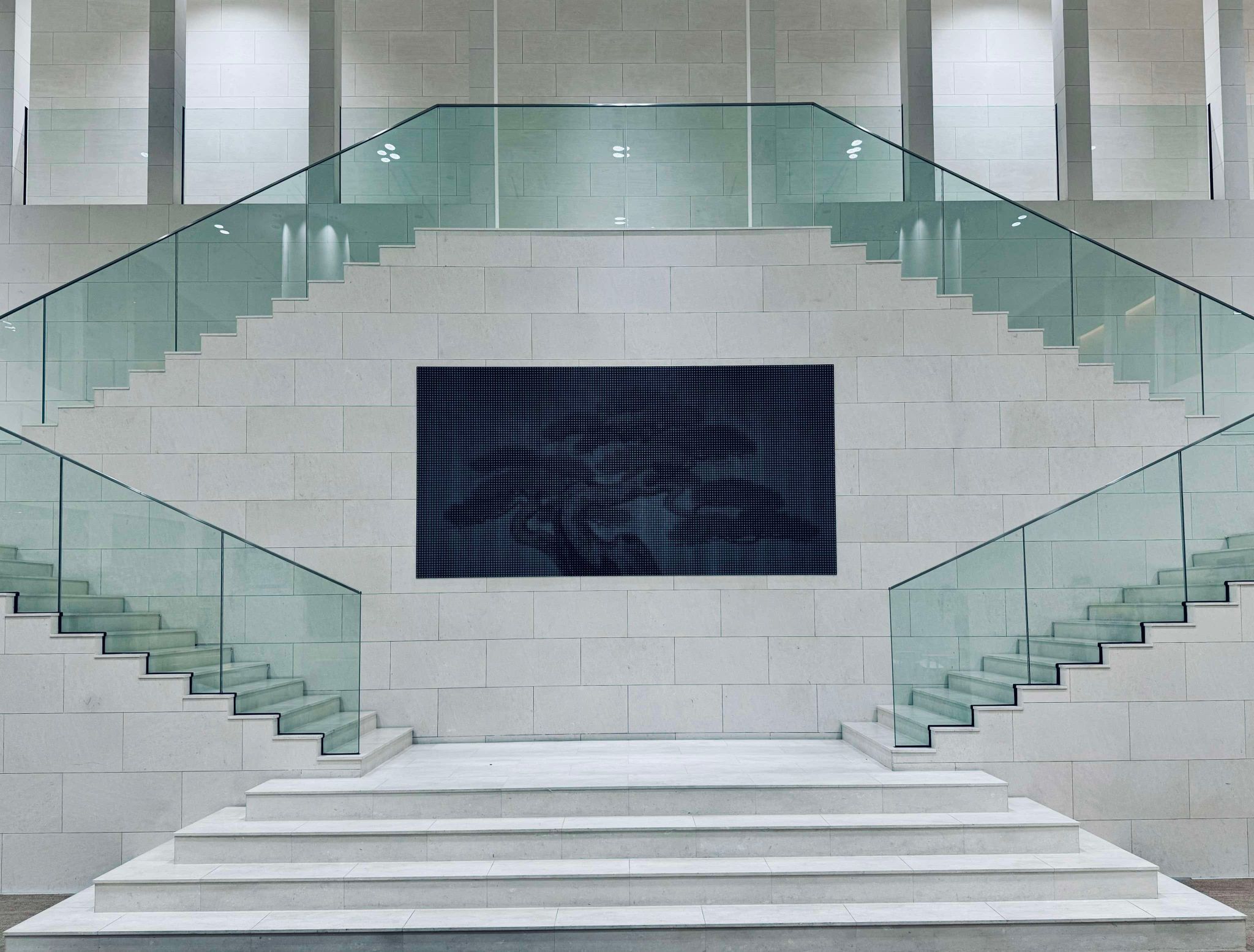
SOTOROJI #3
One protocol becomes an entrance to another.
In chanoyu (the Japanese tea ceremony), the soto-roji, or outer garden, is the first space through which guests pass on their way towards the inner garden and the tea room. Its arrangement of garden, objects, gestures and rituals functions as a shared spiritual protocol, helping participants brush away the ‘dust of the everyday’ and enter another mode of perception. The SOTOROJI series reinterprets this mechanism through the QR code, a protocol shared by contemporary life.
SOTOROJI #3 renders the image of an oimatsu through more than 34,000 QR codes—a venerable Japanese black pine in the spreading, time-worn form depicted on the kagami-ita, the mirror panel at the back of a Noh stage. The motif is traditionally associated with the Yōgō no Matsu at Kasuga Taisha, a Japanese black pine understood as a yorishiro through which a deity of the performing arts may descend. It allows a presence that is not physically there to enter the stage.
Each QR code leads to an individual Ethereum Improvement Proposal (EIP). EIPs are documents describing proposed features, standards or processes for Ethereum, allowing the network to evolve through public discussion. The everyday gesture of scanning a QR code thus leads into a technical and social protocol shared by a distributed community.
The work does not equate the rituals of chanoyu with a decentralised network. By bringing mechanisms from different periods and contexts into contact, it asks how shared signs, conventions and gestures can bring into being—and sustain—a community or world that is not physically present.
The work was selected for the Artists & Sci-fi Writers Cohort of the Ethereum Foundation’s Devcon 7 Scholars Program and presented at Devcon 7 in Bangkok, Thailand.