Hiroya Tanaka Lab + METACITY
Bio Sculpture
The vast bushfires that swept across Australia in 2019–20 came to be known as the Black Summer. Against a backdrop of record heat and drought intensified by human-induced climate change, the fires spread across vast areas. Nearly three billion animals are estimated to have been killed or displaced by the fires.
Bio Sculpture does not seek to reproduce or document the bushfires themselves. What emerged from this disaster was a question of responsibility. If human activity is complicit in the loss of other forms of life, should not at least some of the technologies we have built be directed towards preventing further loss and supporting ecological recovery?
Much of what we call technology has developed in response to human needs, desires, and convenience. What might technology become if humans were no longer its only beneficiaries? Bio Sculpture puts forward “Technology for Multi-Species” as a way of exploring this possibility. Rather than using technology to control nature or steer it towards predetermined outcomes, the work creates conditions in which other forms of life can inhabit and shape their environments.
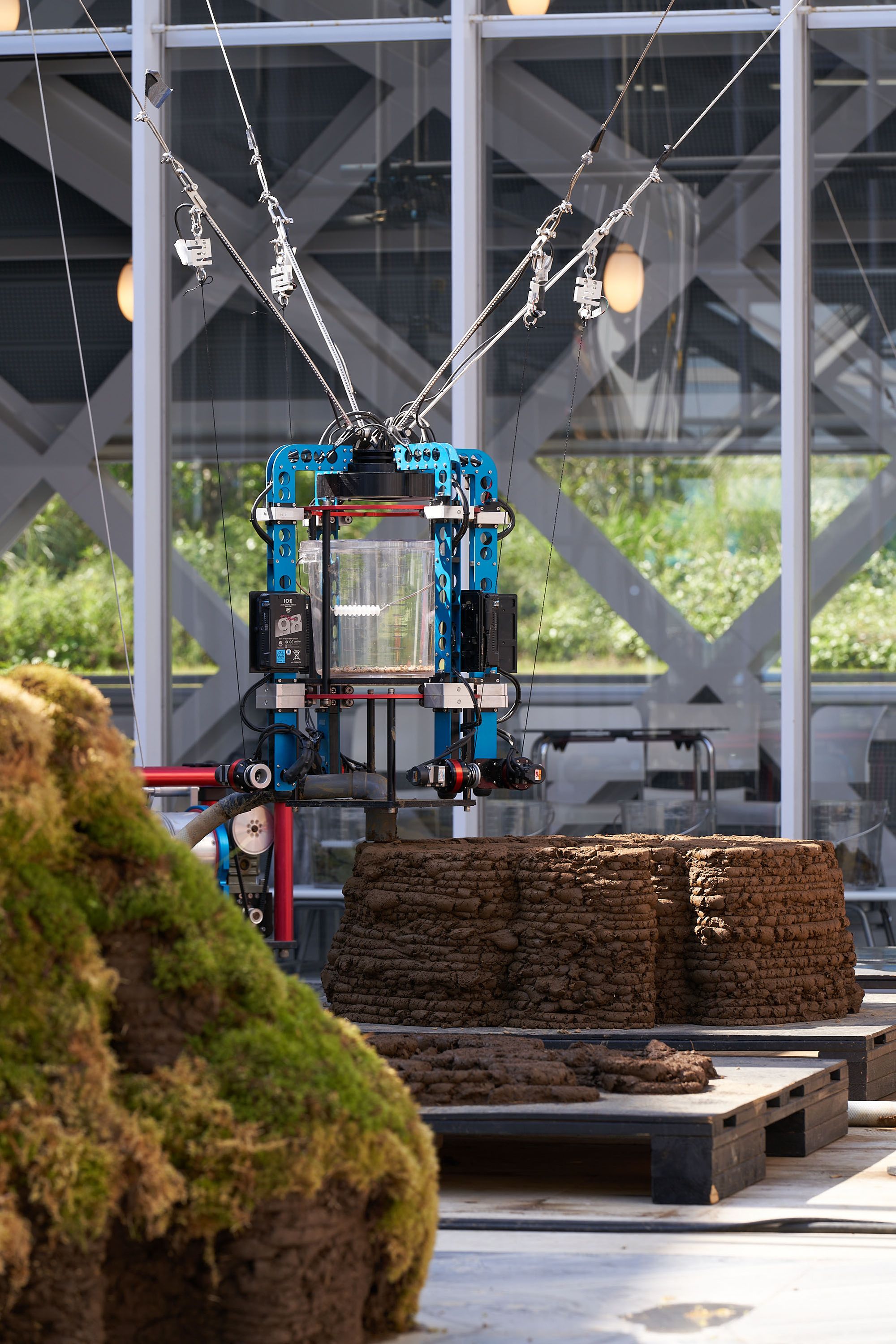
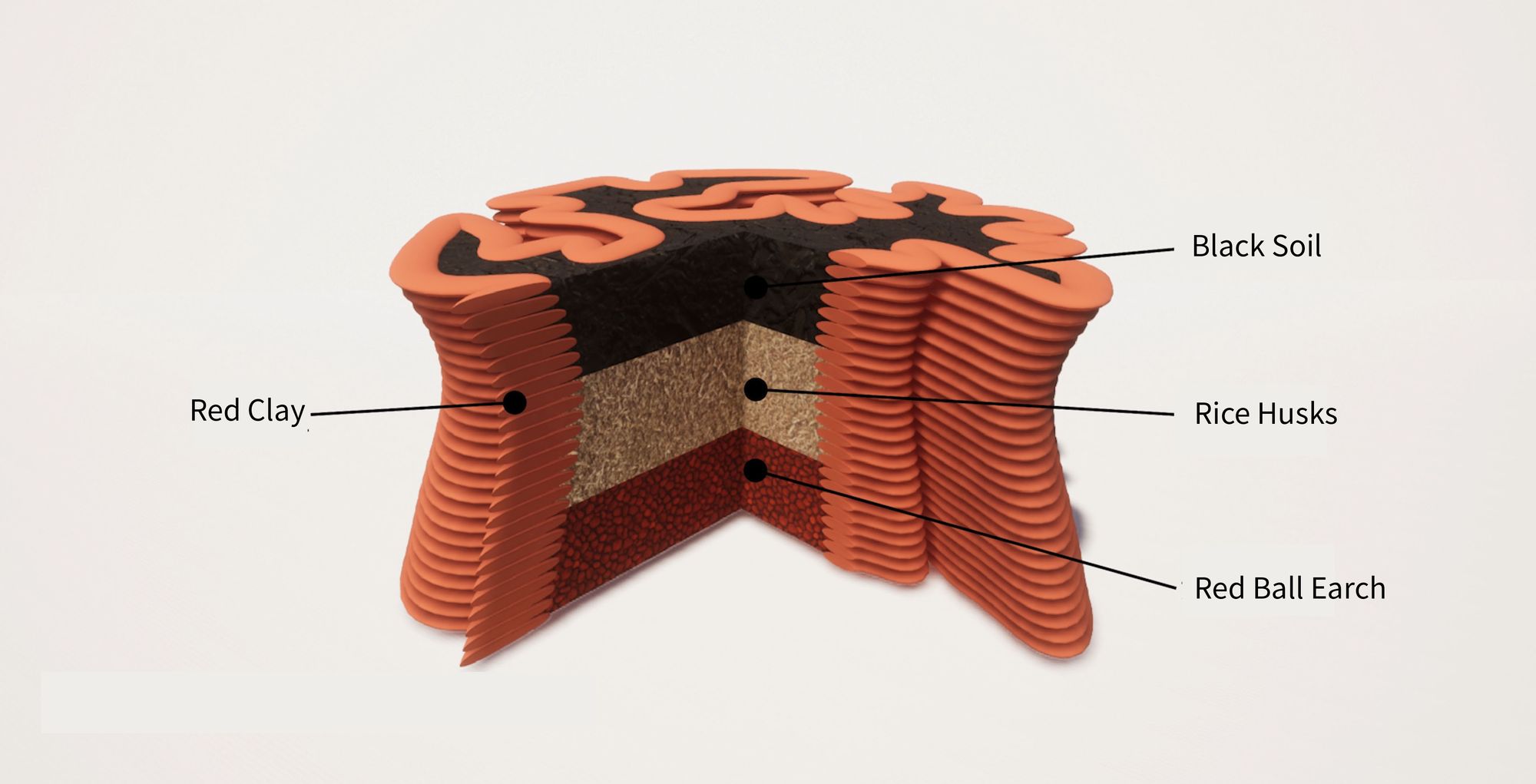
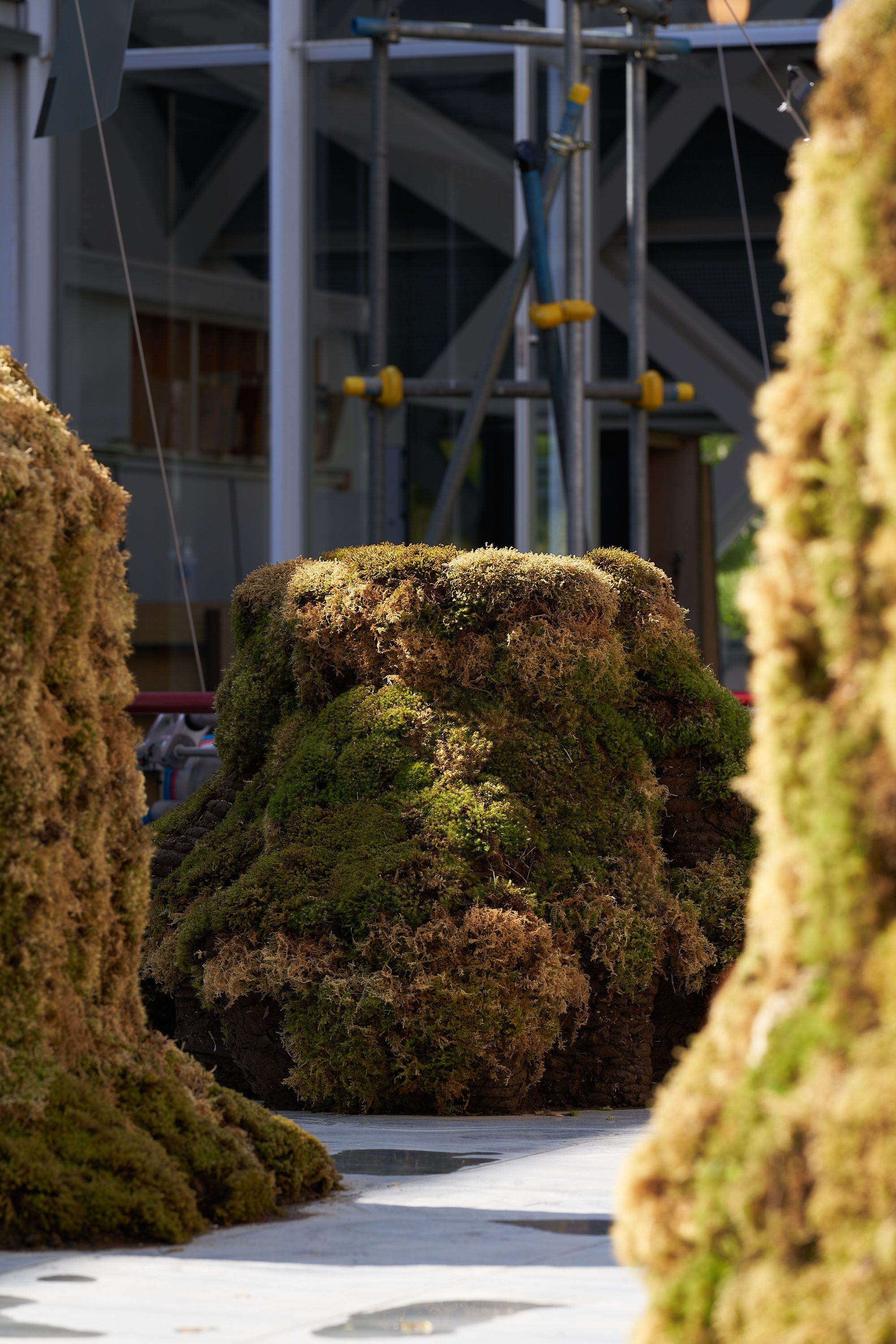
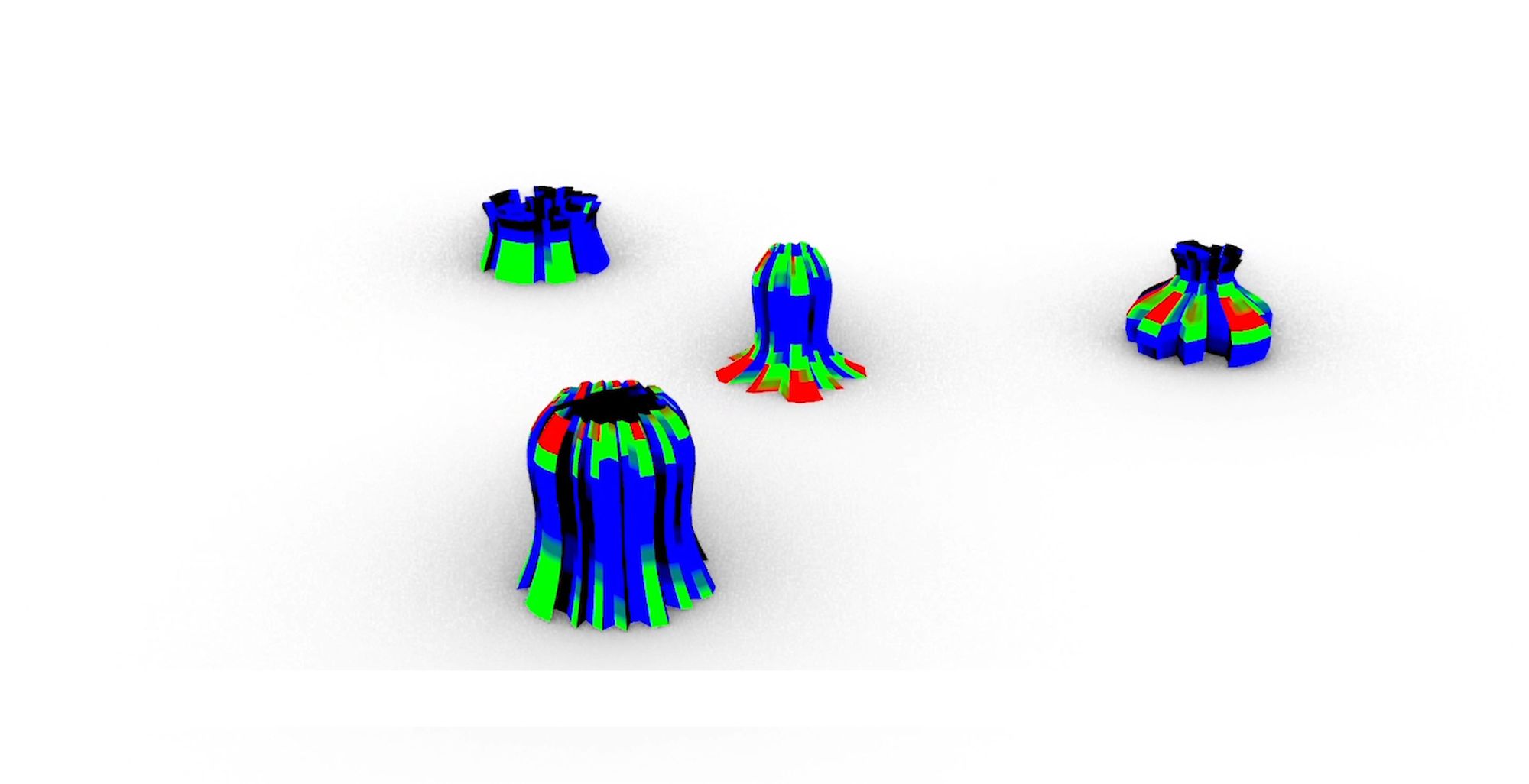
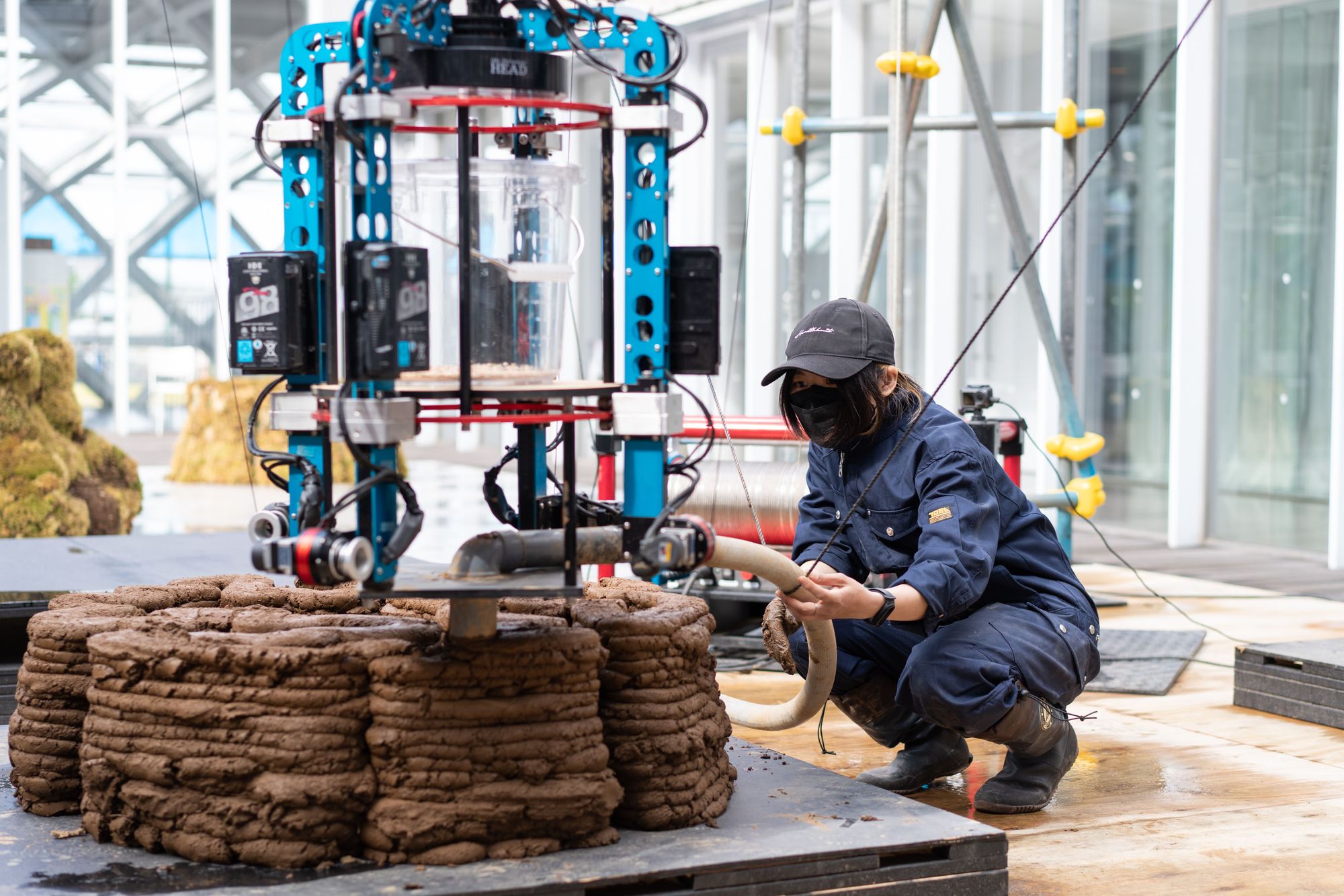
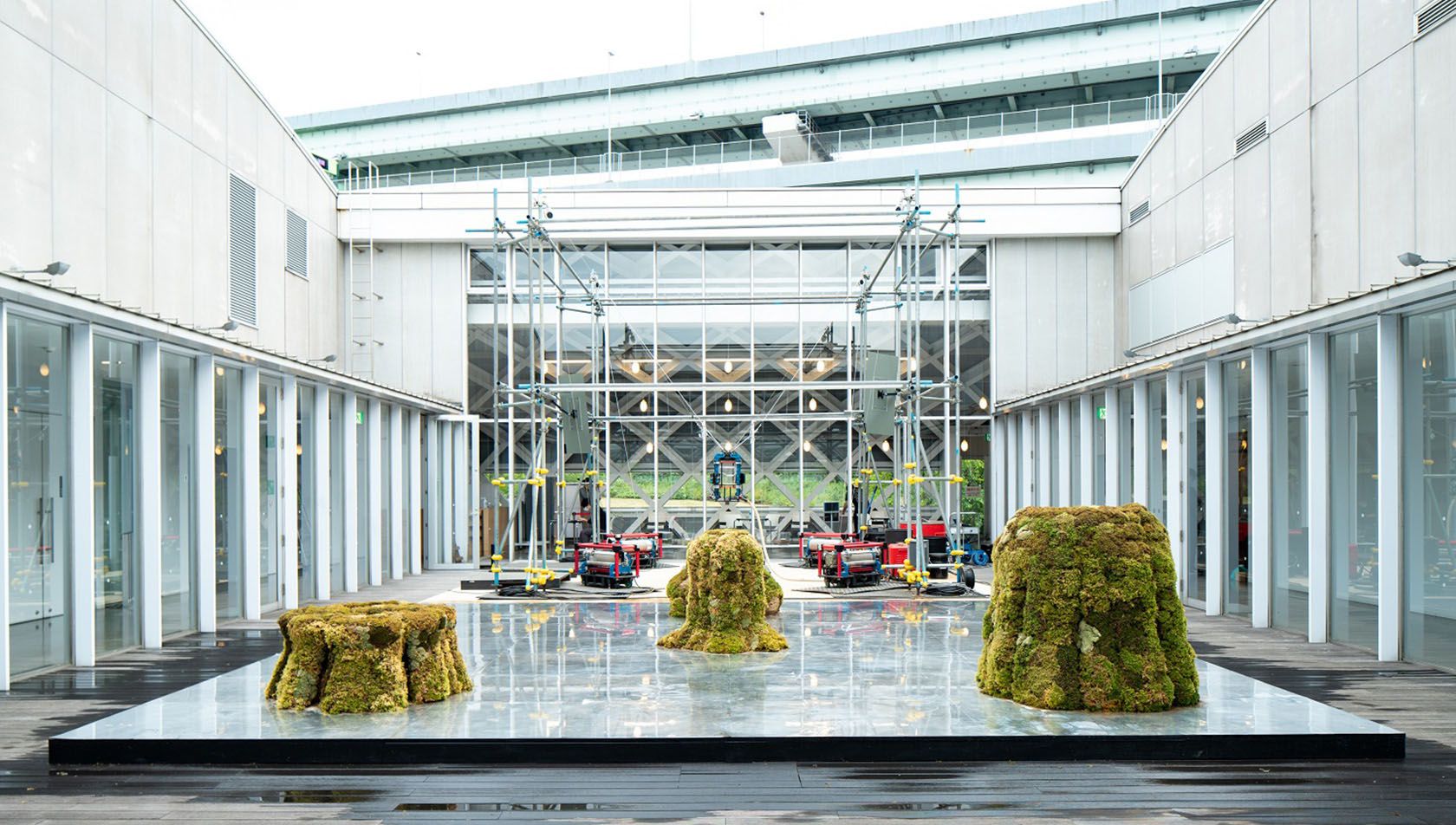
The work uses NIWA, a large-scale, winch-based 3D printer capable of extending up to 30 metres. For the production of Bio Sculpture, the existing system was extensively modified and adjusted by the Hiroya Tanaka Laboratory at Keio University SFC, bringing it into reliable operation for large-scale printing with soil. It extrudes a mixture of red soil, black soil, akadama and rice husks, forming structures based on an algorithm inspired by the growth of coral reefs. Folds within the structures increase their surface area relative to volume, creating microenvironments that retain moisture. Nine species of moss, each with different characteristics, are positioned according to simulations of sunlight.
Fragments of soil are then taken from an existing forest and transplanted into the printed structures. They are treated as “seeds of possible ecosystems”: concentrated forms of biological potential carried from one environment into another. The work does not install a completed ecosystem. Instead, it places these seeds within newly fabricated conditions, leaving the relationships among soil, moss, microorganisms, weather, and surrounding species to develop over time. Changes in microbial communities, temperature, humidity, CO₂, soil composition, and other ecological conditions are tracked through long-term sensing and analysis.
After the art festival closed, part of the work was relocated to the grounds behind the exhibition venue, where it remains installed as a work of public art. Beyond the limited duration of an exhibition, the work continues to live in place, changing through its relationships with the surrounding environment and other forms of life.
Here, sculpture is not an object whose finished form is to be preserved. Humans establish the initial conditions, but they do not complete the work alone. Rather than designing life through technology, Bio Sculpture creates room for life to participate in making the world: a movement away from sculpture addressed to the human gaze, towards sculpture that works for many forms of life.